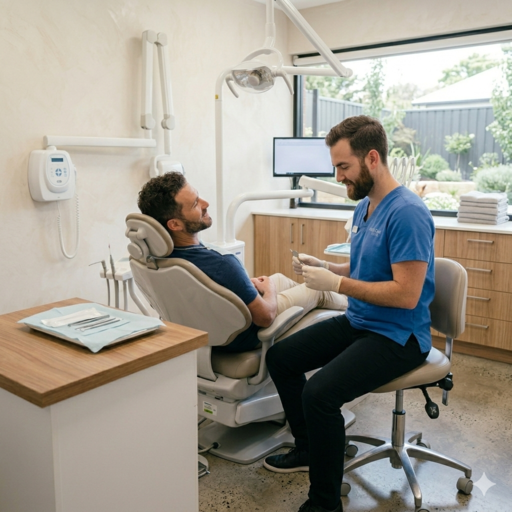
Understanding the Dental Implant Process: A Step-by-Step Guide
Losing a tooth can significantly alter how you chew, speak, and manage your daily oral hygiene routine. Many patients explore restorative options to address these functional challenges and restore stability to their bite. Dental implants provide a structural replacement for missing teeth by utilizing biocompatible materials that integrate directly with your jawbone. This guide outlines the clinical process, timeline, and recovery expectations involved in receiving a dental implant, helping you make informed decisions about your oral health.
Initial Assessment and Clinical Planning
The journey toward replacing a missing tooth begins with a thorough clinical examination. During this phase, your dentist evaluates your overall oral health, the condition of your remaining teeth, and the health of your gum tissue. Diagnostic tools such as digital X-rays or 3D imaging are used to evaluate the density and volume of your jawbone. Adequate bone structure is necessary to support the implant fixture securely.
If the jawbone lacks sufficient volume due to past bone resorption or tooth loss, preliminary procedures such as bone grafting may be discussed. Your clinician will also review your general medical history, as certain systemic conditions or medications can influence healing times. At New Dental Practice, every treatment plan is tailored to individual clinical requirements, ensuring that all risks and suitability factors are fully addressed before proceeding.
The Surgical Placement and Healing Phase
Once the planning stage is complete, the surgical placement of the implant fixture is scheduled. Under local anaesthesia, a small incision is made in the gum tissue to expose the underlying bone. A precise channel is created in the jawbone, into which a biocompatible titanium post is positioned. This post acts as an artificial tooth root. The gum is then sutured closed over or around the site to allow the healing process to begin.
Following placement, a crucial biological phase known as osseointegration takes place over several months. During this period, the surrounding jawbone cells grow around the titanium surface, locking the implant firmly into place. Patients may experience mild swelling, bruising, or localized discomfort for a few days after the procedure, which is typically managed with prescribed or over-the-counter pain relief. Recovery times vary depending on individual healing capacities and bone quality.
Attaching the Abutment and Final Crown
After successful osseointegration is confirmed, a minor procedure is performed to attach an abutment to the implant post. The abutment serves as the connecting element between the submerged implant and the visible replacement tooth. In some cases, the gum tissue is allowed to heal around the abutment for a couple of weeks to create a natural contour for the final restoration.
Once the soft tissues have stabilized, detailed digital or physical impressions of your mouth are taken. These impressions are sent to a dental laboratory where a custom dental crown is fabricated to match the shape and bite of your adjacent teeth. The completed crown is then securely screwed or cemented onto the abutment. Your dentist will check your bite and alignment to ensure proper functional distribution when chewing.
Frequently Asked Questions
How long does the entire dental implant process take?
The total timeframe typically ranges from three to nine months, depending on individual healing rates and whether preliminary bone grafting is required. Osseointegration requires adequate time for the bone to fuse securely with the titanium post before final restorative components can be attached.
Are there risks involved with dental implant surgery?
As with any minor oral surgical procedure, risks include localized infection, minor nerve irritation, delayed bone integration, or surgical site discomfort. A thorough preoperative evaluation minimizes these risks, and individual outcomes vary based on overall health and oral hygiene compliance.
How do I care for a dental implant after treatment?
Implants are maintained similarly to natural teeth through routine brushing twice daily, regular flossing, and attending professional dental check-ups. Maintaining excellent oral hygiene is essential to prevent peri-implantitis, an inflammatory condition that can affect the surrounding tissue and bone.
Consult New Dental Practice in Smileville
If you have missing teeth and wish to explore your restorative options, contact the professional team at New Dental Practice in Smileville, NSW. You can reach our clinic by calling (02) 5550 0123 or visiting our website at https://newdentalpractice.com.au/ to arrange an individual consultation and clinical evaluation.
Any surgical or invasive procedure carries risks. Before proceeding, you should seek a second opinion from an appropriately qualified health practitioner. Individual results may vary.